
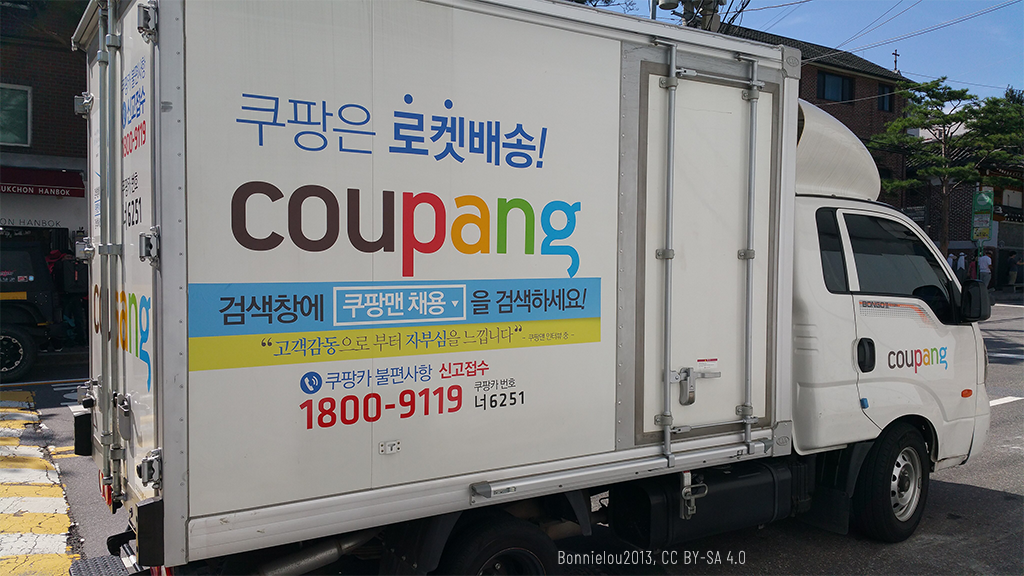
On November 29, the Coupang personal data breach became public.
The incident began with a user tip-off. On November 16, 2025, a 28-year-old man identified only as Chanhee Park received an anonymous email warning that his personal information “may have been compromised.” He contacted Coupang to ask whether this was true. This was the first moment Coupang became aware that a data breach might have occurred.
As the company investigated the report, a more serious problem emerged. This was not a recent incident. According to what later became known, unauthorized access to Coupang’s systems had begun around June 24, 2025. Coupang reportedly detected abnormal activity on November 18. In other words, for nearly five months, personal data could have been accessed from outside.
The scale of the breach was staggering. Approximately 33.7 million users were affected—roughly two-thirds of South Korea’s population. When this figure became public, the country was shaken. The leaked data included names, email addresses, mobile phone numbers, delivery addresses, address book information, and portions of order histories. Coupang stated that financial information such as credit card numbers and passwords had not been compromised. Still, this volume of data was more than sufficient to enable identity theft, phishing, smishing, and other forms of fraud.
Government agencies and investigators moved quickly. Police investigations began, and inquiries followed from data protection authorities and the National Assembly. At that moment, Korean society expected something familiar: an apology from the owner, immediate compensation, and clear measures to prevent recurrence.
Instead, the person summoned was a professional manager.
It soon became clear why. Coupang was not a Korean company but an American one, and its founder, Bom Kim—despite his Korean name—was an American citizen.
Park Dae-joon, the head of Coupang Korea, said he would take responsibility as the local CEO. But his words rang hollow. People already understood that final authority and decision-making power did not rest with him.
Let us pause and look at Coupang itself.
Coupang was founded in 2010, during a period of intense competition among delivery platforms. The company introduced a bold idea—overnight and dawn delivery—and pushed it forward relentlessly, quite literally like a rocket. For years, it absorbed losses measured in trillions of won. Many said its collapse was only a matter of time.
Yet the power of dawn delivery proved extraordinary. Coupang spent years building its logistics infrastructure at enormous cost, accumulating losses that reached several trillion won.
The result was something close to a “Coupang Republic.”
It aligned perfectly with Korea’s preference for speed. Order at night, go to sleep, and find the package at your door in the morning. This system felt unmistakably Korean.
Today, Coupang generates annual revenues in the tens of trillions of won. It has become one of Korea’s representative platform companies, rising to fifth place in economic influence alongside conglomerates like Samsung and Hyundai.
What many had not fully grasped, however, was this: while most of Coupang’s revenue is generated in Korea, its ultimate decision-making structure and legal responsibility lie with its U.S. headquarters.
This incident made that structure suddenly real.
Now, back to the incident.
In Korea, people are accustomed to seeing a company’s owner step forward to apologize in moments like this. Coupang did not do that.
Bom Kim did not appear.
The apology came only in the form of a written notice. The Korean CEO soon resigned. His replacement was Harold Rogers, an executive from Coupang’s U.S. headquarters responsible for legal and compliance matters, appointed as interim CEO. The response, in short, was American in style.
Soon after, in early December, prosecutors conducted search-and-seizure operations at Coupang’s headquarters. According to reports, roughly 1.8 million users deleted their accounts. Class-action lawsuits and compensation claims followed. At the same time, long-standing issues surrounding Coupang resurfaced all at once.
Overwork in delivery and logistics, industrial accidents, and fatal incidents returned to public attention. Reports referenced eight deaths this year alone across delivery and logistics sites. Chronic delays in supplier payments—often exceeding the 60-day settlement period—were again debated. Workers’ demands for improved conditions erupted anew.
It also became clear that whenever pressure mounted, Coupang repeatedly responded with aggressive warnings such as
“We will suspend Rocket Delivery” or “Consumers will suffer.”
The message was blunt: pressure Coupang, and the cost will ultimately fall on consumers.
It further emerged that Coupang had recruited numerous former high-ranking government officials to strengthen its political and regulatory response capabilities. Critics argued that crisis management had taken precedence over institutional reform.
With large-scale punitive damages now being discussed, Coupang found itself cornered. Even so, Bom Kim remained absent.
What does this mean?
Korea is accustomed to corporate owners taking personal responsibility. The United States operates differently. Lawsuits come first. Everything proceeds through legal judgment. Responsibility and compensation follow court decisions.
What many thought was a Korean company turned out to be American.
Without saying it directly, he seemed to be delivering a clear message:
“Let the law decide.”
Successful global companies often have founders the public remembers. Steve Jobs, Elon Musk, Jensen Huang, Jeff Bezos. These figures offered not only corporate visions but visions of their era. What became clear through this incident is that Bom Kim does not wish to be that kind of founder.
He has already succeeded. He earned hundreds of billions of won through past stock sales. He built a company designed to operate as a system. He installed crisis-management manuals, hired executives to handle political and regulatory affairs, and maintained a separate Korean leadership structure.
The message is clear: he does not wish to stand in a position of personal moral responsibility.
If something is wrong, let the law handle it.
Concepts like noblesse oblige do not concern him.
So what should we do?
Delete Coupang today? File lawsuits? Launch boycotts? Remain angry until it disappears?
But Coupang is too large, too deep, too embedded in Korean society for such a simple resolution.
In Korea today, Coupang is no longer a shopping mall. It is life infrastructure.
A place where one day of work produces cash.
A market flooded with demand for sellers.
An essential app that allows consumers to buy time.
That is why anger toward Coupang cannot be neatly resolved.
We already live beneath the Coupang network.
When my work dried up and I had no income, I spent a month working at Coupang’s Yangjae logistics center. For someone unaccustomed to physical labor, it felt like being sent to a labor camp from One Day in the Life of Ivan Denisovich. Endless goods poured down conveyor belts, and we had to sort them quickly into metal carts by address. It wasn’t sweat coming out of my body—it felt like salt. The 30-minute break felt precious beyond words. I still remember how sweet the banana shared by an older woman tasted.
Coupang is always “saving” people. Even those who cannot qualify for unemployment benefits can work there. Those too weak for heavy labor can still scan barcodes. Those who want stability can move from daily work to contract positions. There is always something to do. (At least until the AI-powered logistics centers are completed.)
Across Korea, there are countless Coupang warehouses and delivery camps. Work there for one day, and you get paid. When money is urgently needed, people go to Coupang. The work is grueling, but there is at least enough pay to survive one more day.
Until Korea becomes a basic-income society, Coupang remains the final line of survival.
Coupang appears to be a company with no human face, incapable of offering even a warm word. Instead, it seems to say:
“We are not human. We are a system. Submit your complaint. We will accept legal judgment.”
This statement is cruel—and at the same time, transparent.
What this incident revealed goes beyond a data breach. It revealed the arrival of something new — an unfamiliar corporate giant. Not a company driven by human emotion or vision, but a vast machine powered by servers, terms of service, legal teams, and logistics networks.
What we are facing is not a communicative human being, but a mechanized system that responds strictly by manual.
Whether we like it or not, this mechanical system has already become part of our lives. Companies like this did not begin with Coupang, nor will they end with it. Firms interested in nothing beyond economic efficiency will continue to emerge, and we will have to learn how to live alongside them.
Please do not delete Coupang.
Instead, pay closer attention.
Watch it. Demand change. Force improvement.
Now that it is clear that Coupang has no true owner,
the responsibility of fixing and using this machine has passed to us.
Like it or not, Coupang is already an inseparable part of our lives.
So—
hate it if you must, but fix it and use it.
—
By Sunjae Park
Editor, Korea Insight Weekly
P.S. (December 18)
On December 18, Kim Beom-seok (Bom Kim) announced that he would not attend the National Assembly hearing, citing that he was “too busy as a global CEO.” This decision has sparked widespread public outrage. At a time when a massive data breach and serious labor issues are being raised simultaneously, the absence of the company’s top executive can only be interpreted as an evasion of responsibility.
The greater shock came from the confirmed text messages related to the deaths of workers. Messages sent by Bom Kim included statements such as:
“Do not leave evidence of working too hard,”
“Why would a part-time worker work so hard?”
These words are devastating in and of themselves, even before any explanation or context is offered.
If this is the language used to speak about a worker’s death, then this is no longer a matter of management style or corporate systems. It is a matter of basic human sensibility. I tried to understand this situation through the lens of structure and institutions—of global corporations, American-style systems, and impersonal responses. But in front of these words, all such attempts collapse.
So I offer him this advice:
“Come to Korea. Come here and deal with it.”