
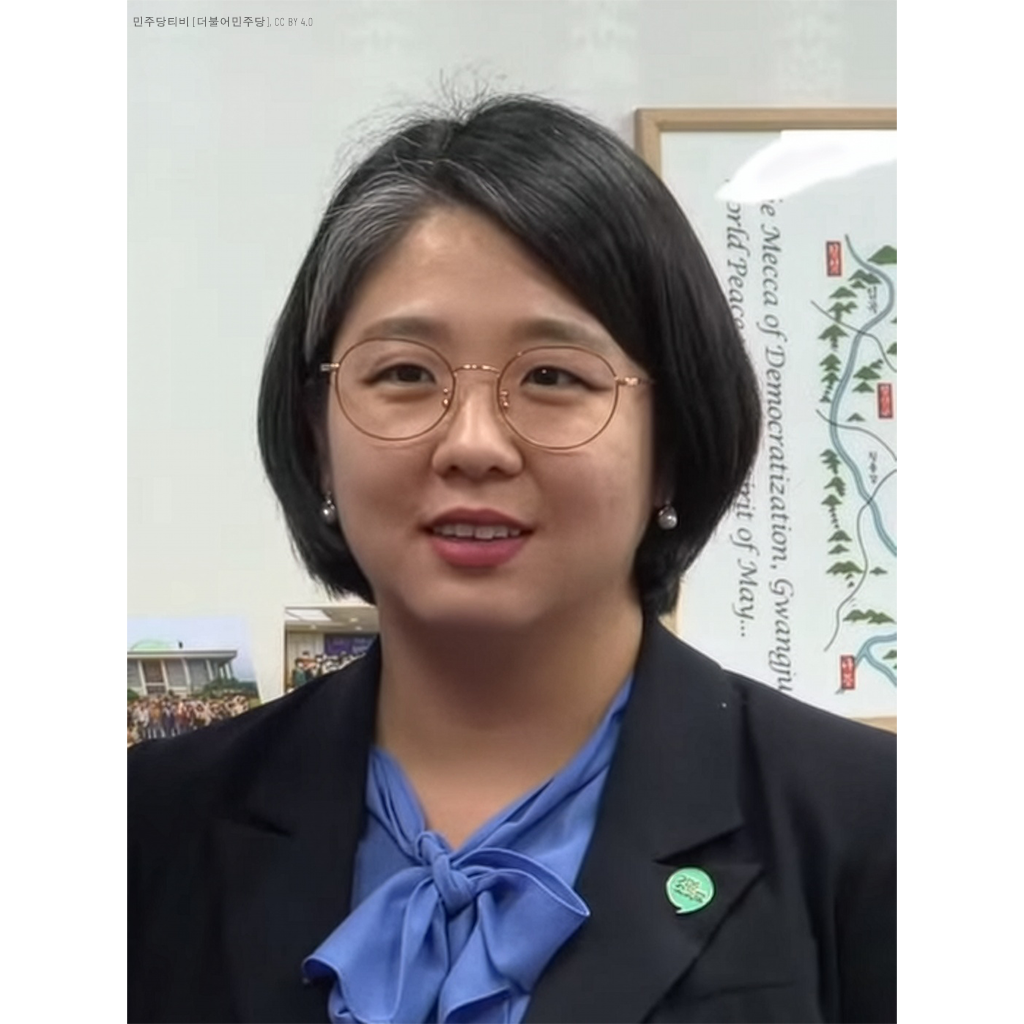
On August 30, 2026, President Lee Jae-myung nominated Yong Hye-in, standing leader of the Basic Income Party, as Minister of Gender Equality and Family. Born in April 1990, she is thirty-six. A two-term lawmaker elected from a party list rather than a district, now serving in the 22nd National Assembly after the 21st, and the sitting leader of a minor party, has been named to a cabinet post. On September 30, 2025, the government approved an amendment to the Government Organization Act at a cabinet meeting, and on October 1 the ministry was expanded and reorganized: in Korean its name changed from “Ministry of Women and Family” to “Ministry of Gender Equality and Family,” though the English name stayed the same. The stated purpose was to widen the ministry’s standing from a women’s-policy agency into the control tower for gender equality policy, and functions on workplace equality — affirmative action, the gender pay gap, support for women’s career continuity — were transferred from the Labor Ministry. Yong is the first minister nominated under that new Korean name.
The controversies surrounding her — holding a National Assembly seat while serving as minister, and the salary her spouse received from the party — are matters for the confirmation hearing to settle, a process that in Korea, unlike a U.S. Senate confirmation, cannot block an appointment on its own. Here I would like to take up a more basic question. What kind of Ministry of Gender Equality and Family should we have?
When people hear the words “gender equality,” many think first of women’s issues. Career interruption, the wage gap, sexual violence, digital sex crimes, pregnancy and childbirth. These matter, of course. But gender equality today does not end there. There are young people who want children but keep postponing because of housing prices. There are parents who had a first child but gave up on a second because of the cost of care. There are fathers who want to take parental leave but read the mood at work first. There are people in middle age who cannot prepare for their own retirement because they are caring for their parents. There are people who fall outside the protections that come with being legally recognized as a family because they never married, and there are parents raising a child alone while worrying about next month’s rent. Young men face insecurity in employment and housing; young women face insecurity in safety and career. Older people face the problem of care, and children have a right to be cared for. At the center of all these problems lies a single question: how is a person to live in this society? Gender equality is no longer an agenda for women alone. It has become a matter tied directly to all of our lives.
Only a few years ago this ministry was the subject of an abolition debate, its elimination floated as a campaign pledge. If you think of the Ministry of Gender Equality and Family as a ministry for women only, that debate makes sense. But the picture changes once you place family and care, youth and sexual violence, childbirth and work-life balance side by side as a single problem of daily life. Many of the most urgent bread-and-butter problems in our society fall precisely within this territory. Why are young people not marrying? Why are they not having children? Why do women leave their jobs after giving birth? Why are men not free to take part in raising their children even when they want to? Why are single-parent households more vulnerable? Why can dual-income couples not find somewhere to leave their children? Why does caring for an aging parent fall on one person in the family? Why does a digital sex crime destroy an entire life? This cannot be filed away in the small box labeled “women’s policy.” It is the country’s competitiveness, a household’s budget, a young person’s present, a parent’s old age, and a child’s future. These are bread-and-butter issues, plain and simple.
According to the finalized 2025 birth statistics released last month by Statistics Korea, the total fertility rate rose to 0.80, back above 0.8 for the first time in four years, and the number of births rose 6.7 percent from the previous year to 254,341 — the largest increase in fifteen years. According to Ministry of Employment and Labor figures, men accounted for 38.8 percent of those receiving parental leave benefits in the first half of this year, a share that has kept climbing since it first passed 30 percent in 2024. When the way people work and care shifted a little, the numbers moved.
So the minister we need now is not someone who defines the family from behind a desk, but someone who understands how people actually live and how that is changing, and who can rebuild the system to match. Families used to be relatively simple. For a long time the default setting of our society was a model in which the father worked and the mother looked after the home. That is no longer the case. Dual-income households have become the norm, and more people are not marrying at all. There are parents raising children alone, households where grandparents look after grandchildren, and a growing number of unmarried couples living together. People build and live in families in far more varied ways than before. Institutions, however, have not kept pace. On July 5, 2021, Yong went to the National Assembly holding her fifty-nine-day-old son. She was there to press for passage of the so-called child accompaniment bill, an amendment to the National Assembly Act that would allow lawmakers to bring a nursing child under twenty-four months into the chamber — a provision that would apply equally to fathers serving in the Assembly. When she reported to the confirmation preparation office on September 2 and named “gender equality for everyone” as a key task of government, she was probably aiming at the same point. Whether she means it can be confirmed at the hearing, and, if she is appointed, in what follows.
I would like the Ministry of Gender Equality and Family to be the ministry that ends the war between men and women. In our society today, the moment anyone says “gender equality,” men and women start fighting. Speak of women’s rights and someone says men will lose out; speak of men’s difficulties and someone says you are trying to roll back women’s rights. But the state’s job is not to hand victory to one side. It is to reduce unnecessary competition. Rather than making people fight over who should do more of the child-rearing, we should build workplaces where a father takes parental leave without penalty. Rather than leaving childbirth as a woman’s sacrifice, we should build a society where raising a child does not bankrupt a household. Rather than speaking to young men only of military service and the competition for jobs, we should address in the language of policy the isolation, housing and employment problems they feel. Rather than asking women to accept a broken career, we should stop leaving the burden of care to individuals and families alone. The goal of gender equality is not for one sex to defeat the other. It is to reduce the unreasonable burdens people have had to carry simply because they are men, or because they are women.
If the ministry does its job, the change will show up not in one grand piece of legislation but in ordinary life. A father applying for parental leave becomes unremarkable. A mother does not have to give up her career because she gave birth. A dual-income couple can find somewhere to leave their child in the late hours. A single-parent household is not penalized for the shape of its family. Teenagers are safer from violence and exploitation. A victim of a digital sex crime is not wounded a second time in the process of reporting and being protected. When a parent needs care, the responsibility is not dumped on one member of the family. And above all, having a child stops being an individual sacrifice and becomes something society carries together.
We always begin talk of low birth rates with statistics. But behind the statistics are people. Unless their lives change, no plan to raise the birth rate alone will change anything. The answer does not lie in cash incentives alone. It lies in giving people, across the whole course of marrying, having children, working, caring and growing old, the belief that it is all right to live in this society. And the ministry charged with that work is the Ministry of Gender Equality and Family.
So rather than the question of whether I support Yong Hye-in, this is what I want to ask. What kind of Ministry of Gender Equality and Family do we want? One that takes women’s side? One that takes men’s side? I would like it to take neither side, but the side of people. A ministry that does not split women and men apart but builds the conditions for them to live together. A ministry that does not sit in judgment on the shape of a family but helps the people inside any family live safely. A ministry that does not urge people to have children but builds a society where having one does not wreck your life. And above all, a ministry that keeps our sex from deciding our lives.
Politics is, in the end, a matter of choice. Whom to support, whom to oppose. But I believe bread-and-butter concerns come before political camps. To the parent working out this evening where to leave a child, to the father hesitating over whether to file for parental leave tomorrow, to the woman harassed at work with no idea whom to ask for help, to the parent raising a child alone and worrying about the rent, to the person in middle age worrying about a parent’s hospital bills — what do left and right mean to any of them? What we need is not a country that divides people into sides, but one that makes it possible for us to live together.
The confirmation hearing for Yong Hye-in appears likely to open soon. I hope it does not end as nothing more than a verdict on whether one politician passes or falls. A society where women and men do not have to fight. A society where you can work after having a child. A society where you can care for your family while working. A society where a family of any shape is respected. A society where young people do not have to give up their future. That is the gender equality we should be talking about now, and these are the bread-and-butter issues we should be talking about now. Perhaps whether this ministry succeeds or fails will decide the next decade of our society.
Leave a Reply