
Late on January 30 in the United States, reports emerged that Donald Trump had nominated Kevin Warsh as the next Chair of the U.S. Federal Reserve. In response, stocks, Bitcoin, gold, and silver all moved lower at once.
Gold in particular dropped by roughly 10 percent in a single day in the U.S. market.
When the value of the dollar rises, the price of gold tends to fall. For investors outside the dollar zone, gold—priced in dollars—feels more expensive. This leads to weaker demand and encourages profit-taking, prompting investors to sell gold. As a result, gold prices decline.
The recent surge in gold followed a familiar sequence: concerns over the erosion of the Federal Reserve’s independence, weakening trust in the dollar, a softer dollar, and finally a stronger gold price. Gold had risen rapidly and was clearly overheated. Financial positions, including ETFs, had piled up. The market was waiting for an excuse—some kind of event—and the Fed chair nomination arrived at precisely that moment.
Like a market that was already waiting for an excuse, the announcement delivered it. This had less to do with who Kevin Warsh actually is, or whether he would ultimately deliver the rate cuts Trump might want, and more to do with the fact that a correction needed a justification—and suddenly, there it was.
With a single news headline about the Fed chair nomination, profit-taking in an overheated gold market accelerated. Margin calls, risk reduction, and position unwinding followed in quick succession. In that sense, this drop can be described as a structurally healthy correction.
All right, then. If gold prices have fallen by double digits like this, should we buy gold now?
What exactly is gold, that people become so obsessed with it—despite the fact that it pays no interest, is heavy, and usually ends up locked away in a safe or hidden deep inside a wardrobe?
From antiquity to the present, regardless of how times have changed, people have always believed in the value of gold. Gold has been regarded as the most precious substance, an offering to the gods, and a value that never changes. You may distrust the dollar, the yuan, or the euro, but people still trust gold. Today, the dollar plays that role, but until not so long ago, the world lived under the gold standard, a system in which money was directly linked to gold.
So what, exactly, is gold?
Gold is not a metal that was created on Earth.
Gold is an element that cannot be produced by Earth’s internal heat, pressure, or volcanic activity. Elements as heavy as gold require energies comparable to nuclear explosions—or environments even more extreme.
Put simply, this is how it works. Ordinary stars like our Sun fuse hydrogen into helium, and that is where they stop. They do not have enough energy to create much heavier elements. Gold can only be formed during the most violent events in the universe—when a star dies in a supernova explosion, or when neutron stars collide. In other words, gold is the byproduct of extreme cosmic violence.
That is why gold is so rare.
Because gold is heavier than lead, when the Earth was young and still molten, gold sank toward the planet’s center along with other heavy elements. Today, scientists believe that most of the gold on Earth lies buried deep within the core, far beyond human reach. The gold we can actually mine and touch on the surface is only a tiny fraction of Earth’s total gold.
So where did the gold near the surface come from?
A significant portion of the gold found in Earth’s crust is often explained as having been delivered later, during a period known as the Late Heavy Bombardment, when countless asteroids and meteorites collided with the young Earth and brought precious metals with them.
In short, gold does not truly belong to Earth.
It is something that fell from the universe—almost mythic in nature.
And not just mythic, but extraordinarily scarce and precious.
What is remarkable is that humans seem to have sensed this sanctity of gold from the very beginning. Since ancient times, people have treated gold as an exceptional treasure. For humans, gold was an offering to the gods, the most valuable substance imaginable.
In the fifth century BCE, a gold tablet left by Darius the Great of Persia bore these words:
“This land is mine, and this gold proves it.”
The empire is gone, but the gold tablet remains.
The same is true in Korea.
The Silla Kingdom, which lasted for a thousand years, has vanished, but its beautiful and dazzling gold crowns remain intact to this day. Perhaps humans are instinctively drawn to gold—loving it, venerating it, and even worshipping it. Gold does not change. Like a god, it endures.
Human obsession with gold continued into the Age of Exploration. Christopher Columbus’s voyage toward the New World was driven not only by maps and science, but also by an overwhelming hunger for gold. In South America, the myth of El Dorado—the golden city or golden kingdom—drove people mad, unleashing countless expeditions, massacres, and acts of destruction in pursuit of a shimmering illusion.
In the modern era, this obsession did not disappear; it merely changed form. For a long time, the global monetary system—centered on the United States and Europe—operated under the gold standard, in which currencies were backed by physical gold reserves. Although the system officially came to an end in 1971, when the United States suspended the dollar’s convertibility into gold amid mounting postwar fiscal pressures and shifts in the international order, gold itself never lost its role.
The more a nation wavers, and the more trust in currency erodes, the more gold asserts its power—like a final line of defense.
Korea is no exception.
From the National Debt Repayment Movement during the final years of the Korean Empire, when citizens voluntarily contributed valuables to repay state debt, to the Gold Collection Campaign during the 1997 IMF financial crisis, when gold long hidden away in wardrobes poured out to save the nation, gold has repeatedly emerged at moments of national crisis.
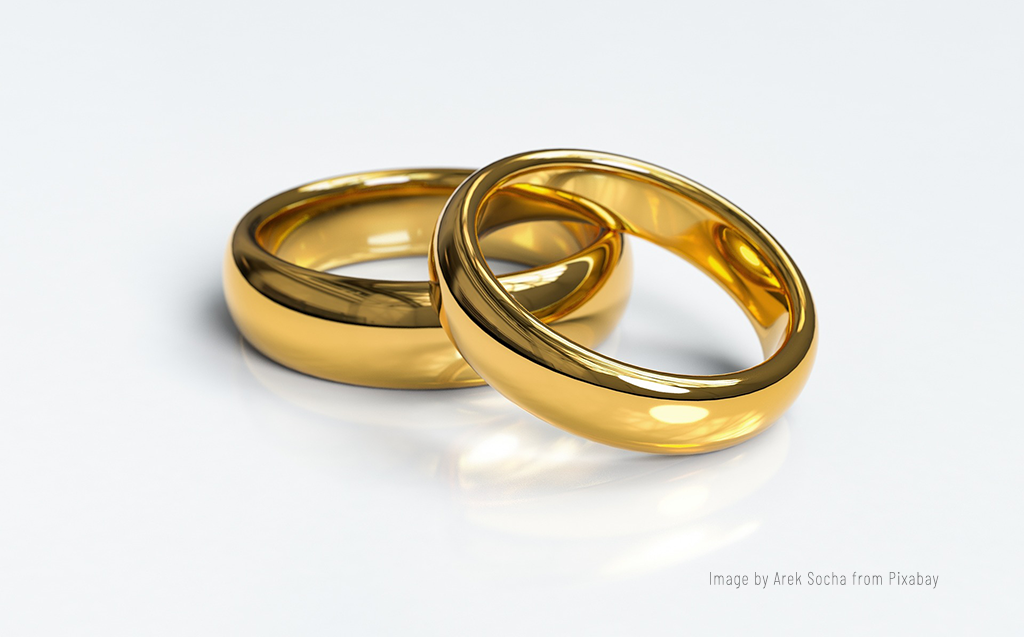
In Korea, it was once natural to give a gold ring when a baby was born. A child wearing gold rings on all ten fingers symbolized a future filled with blessings.
This is not unique to Korea. In India, China, the United States, and across Europe, people all over the world have loved gold without hesitation or calculation.
Gold is highly compatible with the human body and does not corrode, which is why it has long been used in dental work. It also conducts electricity extremely well and does not oxidize, making it a crucial material in smartphones and semiconductors. Because it remains stable in extreme temperatures and under intense radiation, gold is also used in satellites and spacecraft. In every sense, gold lives up to its origins as a substance born in the cosmos—its uses are cosmic in scale.
Humanity’s love affair with gold seems endless. Officially, the United States holds the world’s largest gold reserves, but when privately held gold is taken into account, countries like India and China—where enormous quantities of gold are stored in homes rather than state vaults—may be holding far more than official figures suggest. By comparison, South Korea’s official gold reserves are relatively modest on a global scale.
So then, now that gold prices have corrected, is this the moment to buy? Should one rush into gold ETFs even without purchasing physical gold? Of course, that decision belongs to each reader. Some may already be opening gold trading apps and placing buy orders.
But for those who truly love gold, perhaps it makes more sense to see it not as a vehicle for short-term profit, but as a final safeguard for the people they cherish. Not speculation or investment, but buying physical gold for meaningful moments—perhaps a ring for a child’s first birthday, or gold jewelry as a wedding gift.
You might ask who I am to say that investing in virtual gold is wrong, while buying physical gold is right.
You might ask why that would be what the gods want.
My answer is simple.
As Dostoevsky so often suggested, it is merely a feeling—a sense that this is how it should be.
Gold is not an object of trade.
Gold is a sacred object that, in the final moment, stands guard over us.
And because of that, gold deserves its own form of respect, its own rituals, and its own way of being treated.
In any case, thinking about gold is a deeply pleasurable exercise.
A divine substance from the cosmos.
An indestructible metal loved by all humanity.
Even if humanity disappears, gold will remain.
Gold is eternal.
On a Sunday night, with barely enough money to buy even a single small gold ring.
—
By Sunjae Park
Editor, Korea Insight Weekly